
Why Your Donors Give — and Why They Stop
If you work in fundraising, you’re likely familiar with this discouraging figure: according to the 2024 Fundraising Effectiveness Project, fewer than one in five new donors acquired in 2023 gave again the following year. In other words, the vast majority of your new supporters disappear after their first gift. The question that follows isn’t “how do we find more donors?” but rather “why do the ones we have stop giving?”
The answer, more often than not, isn’t financial. It’s deeply human.
This is where a conceptual framework as timeless as it is universal comes in: Abraham Maslow’s hierarchy of needs, first published in 1943 in his paper A Theory of Human Motivation. Adapted to the world of philanthropy — notably by Claire Axelrad, a fundraising consultant recognized as Outstanding Fundraising Professional of the Year by the Association of Fundraising Professionals — this pyramid offers a powerful lens through which to understand what drives an individual to give, to engage, and above all, to return.
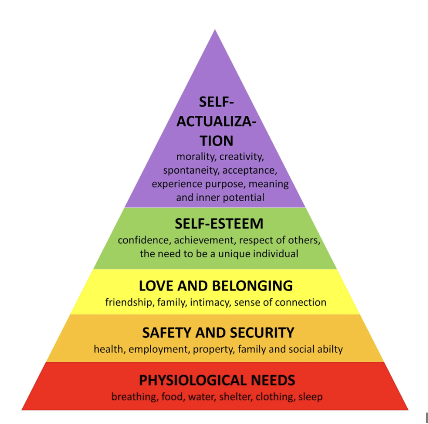
The Donor Hierarchy of Needs: Five Levels You Cannot Afford to Ignore
The central idea is simple yet transformative: just as human beings progress from a fundamental need for survival toward an aspiration to fully realize their potential, donors also move through a hierarchy of relational needs with your organization. And if you fail to meet those needs — from the most basic to the highest — you will lose their support, even if your cause is exceptional.
Level 1: Organizational Credibility (Survival)
Before making any gift, a donor asks one fundamental question: will this organization survive and deliver on its promises? This is the baseline need — the equivalent of food and shelter in Maslow’s original pyramid. At this stage, your role is to demonstrate that your structure is solid, transparent, and sustainable. This means publishing accessible financial reports, maintaining clear governance, and sharing a track record of concrete results. An organization that fails to communicate about its institutional health loses potential donors before it has even engaged them.
Level 2: Trust (Security)
Once reassured about the organization’s viability, donors ask a second question: will my money be used appropriately and produce a real impact? According to a Give.org study, nearly 69% of donors worry their information could be compromised when giving to a new charitable organization. Financial transparency and accountability are therefore not simply good practices — they are prerequisites for a donor to feel secure. Regular impact reports, clear metrics, and honest communication about how funds are used are the tools that build this trust.
Level 3: Belonging (Community)
Once the first two needs are met, donors seek something warmer: do I belong to a community of people who share my values? Victor Frankl, in his celebrated reflection on the search for meaning, wrote that “love is the ultimate and highest goal to which a human being can aspire.” Philanthropy — etymologically “the love of humankind” — speaks directly to this need for connection. Creating spaces for donors to exchange ideas, organizing inclusive events, and fostering peer-to-peer connections are all levers for transforming an isolated act of generosity into lasting membership in a movement.
Level 4: Recognition (Esteem)
The fourth need is to be seen and valued. The donor wonders: do you recognize my contribution for what it truly is? A word of caution here: recognition is not reserved for major donors. Claire Axelrad emphasizes that organizations have the power to give donors the sense of meaning they are seeking — and this begins with sincere, personalized gratitude that is independent of the gift amount. A phone call after a first donation, a handwritten note, a mention in your newsletter: these gestures, which may seem small, respond to a deep human need to be acknowledged for who you are, not only for what you give.
Level 5: Self-Actualization (Meaning and Purpose)
At the top of the pyramid sits the most profound need of all: finding meaning in one’s life through philanthropic engagement. Maslow described self-actualizing people as individuals who are interested in solving the problems of others — often a central focus of their lives — who feel a closeness to other people, and who appreciate life. At this level, the donor is no longer wondering whether your organization is credible or whether their gift will be well used — they already know. They are asking instead: does what I do here help me become the person I want to be? Your role becomes that of a meaning-maker: connecting the gift to the donor’s life journey, creating legacy opportunities, and telling stories of transformation in which they recognize themselves as the true hero.
From Theory to Practice: What This Changes Concretely
Understanding this hierarchy is not enough — it must be integrated into your donor relationship strategy. Consider the example of a Geneva-based humanitarian organization working on access to clean water in developing countries (fictional example, for illustration purposes). For years, they focused on emergency appeals with striking images and sobering statistics. Donations came in, but donors didn’t return. By adopting a needs-based approach — publishing clear impact reports (level 2), creating a donor circle with quarterly gatherings (level 3), and sending personalized thank-you notes naming the specific beneficiary supported by each gift (levels 4 and 5) — this type of organization can realistically expect to double or triple its retention rate.
Data from the Fundraising Effectiveness Project shows that donors who contribute more frequently are significantly more likely to give again: a donor who has given seven or more times shows a retention rate of 87.3%, compared to just 19.2% for donors who have given only once. This is not a coincidence — it is the result of a relationship that has progressed up the hierarchy of needs.
The Association of Fundraising Professionals reminds us that it is essential to recognize the life events of your donors: a bouquet of flowers or a condolence card at the right moment can leave a memorable impression, showing that you value the person beyond their financial contribution.
Conclusion: Stop Fundraising, Start Facilitating Philanthropy
The donor hierarchy of needs is not merely an elegant theoretical tool. It is a call to shift paradigms: from a transactional mindset to a relational one, from a culture of “how much” to a culture of “why.” As Claire Axelrad puts it, the role of nonprofit organizations is to help their donors experience the joy of giving — and neuroscience confirms it: giving activates the brain’s pleasure centers.
In a landscape where the philanthropic sector is seeing an increase in total dollars raised but a 4.5% decline in the number of donors, retention is no longer optional. It is a strategic necessity. And to achieve it, you must start with the simplest — and most overlooked — question in the profession: what does my donor actually need?
Do you need expertise and support for your organization? Let’s talk about it!
To keep up to date with the latest articles, follow me on LinkedIn and subscribe to the newsletter.
Copyright © 2026 E | C Consulting – All Rights Reserved – To use this content, please ask for permission in advance and cite the source if agreed.
