
Sympathy or Empathy: A Distinction That Changes Everything
In donor relations, there is a frequent — and costly — confusion between two attitudes that appear similar but produce radically opposite results: sympathy and empathy.
As Brené Brown, researcher and globally recognized author for her work on vulnerability, puts it: “Empathy fuels connection. Sympathy drives disconnection.” Sympathy means feeling sorry for someone, from a slightly elevated position, often tinged with a sense of good conscience. Empathy, on the other hand, means choosing to come down and meet the other person where they are — to feel with them rather than for them.
For a fundraising professional, this distinction is far from trivial. A donor who feels like the object of your pity or condescension — however well-intentioned — will never feel truly understood, nor genuinely connected to your cause. A donor who feels met in what matters deeply to them will come back.
The Three Faces of Empathy in Fundraising
American psychologist Daniel Goleman, known for his work on emotional intelligence, distinguishes three forms of empathy — all of them relevant in a philanthropic context.
The first is cognitive empathy: the ability to intellectually understand another person’s perspective, to grasp their logic without necessarily sharing their emotions. In fundraising, this means understanding why a donor is drawn to one cause rather than another — what life events, values, and worldview have led them there. It is the foundation of any effective prospecting and cultivation strategy.
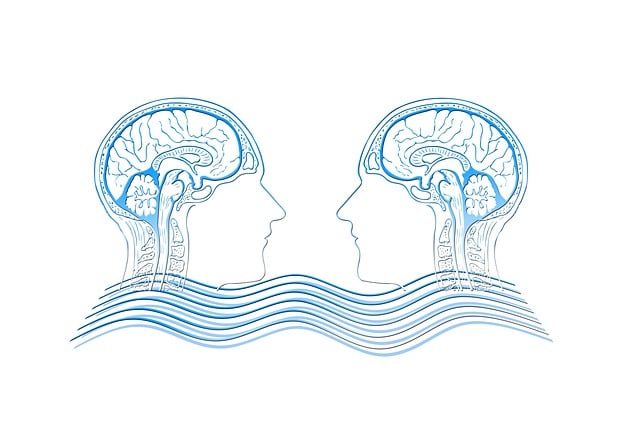
The second form is emotional empathy: the capacity to authentically resonate with what the other person feels, almost physically. Neuroscience points to the activation of mirror neurons — the brain cells that allow us to “live from the inside” the emotions we observe in others. Neuroimaging research confirms that making a donation activates the social and emotional areas of the brain — those involved in empathy, social bonding, and reward. A fundraiser who knows how to touch this chord — by sharing a story that resonates, by asking a question that surfaces a genuine emotion — opens the door to a far deeper connection than any statistics-based appeal ever could.
The third and most powerful form is compassionate empathy: it does not stop at understanding and feeling — it acts. This is the movement from emotional resonance to mobilization. In philanthropy, it is the moment when a donor ceases to be a compassionate observer and becomes an active partner in change. A large-scale study conducted with active donors of a European charitable organization confirmed that empathy is a significant predictor of donation behavior, above and beyond traditional variables such as past behavior or socio-demographic data.
The goal for any fundraising professional is to cultivate all three dimensions — in this order, as a natural progression toward increasingly deep engagement.
Six Concrete Techniques for Practicing Empathy Every Day
Understanding empathy in theory is one thing. Practicing it systematically and authentically in every donor interaction is quite another. Here are six directly applicable techniques, drawn from relational psychology and adapted to the philanthropic context.
Perspective-taking involves, before any meeting with a donor, asking yourself a simple question: what might they be thinking and feeling right now? Imagining their life context — a recent retirement, a family loss, a business built from nothing — allows you to approach the conversation with calibrated sensitivity and to avoid the kind of missteps that erode trust before it has even been built.
Empathic inquiry relies on open-ended questions that invite donors to express what matters most to them: “How does this cause affect you personally?”, “What would it mean to you to see this problem solved?” These questions are not seeking information — they are opening a space. And once a donor begins to speak, the golden rule is not to rush the conversation forward: let the emotion exist, let the silence breathe.
Validation is perhaps the most underused technique in fundraising. Telling a donor “that makes complete sense” or “your concern is absolutely legitimate” costs nothing and produces a profound effect: the feeling of being heard, of being recognized in their unique experience. Conversely, minimizing or correcting a donor’s emotions — even with the best of intentions — is one of the surest ways to create distance.
Appropriate self-disclosure means, sparingly, sharing a genuinely relevant personal experience to build a bridge between yourself and the donor. A fundraiser who says to a bereaved donor: “I lost my mother to cancer five years ago. It changes you deeply. I imagine that’s part of what connects you to this cause.” — before immediately bringing the focus back to the donor’s own experience — creates a moment of authentic human connection that transcends the professional relationship. The key is that it remains brief, sincere, and followed by a genuine return to the other person.
Non-verbal empathy is often overlooked, yet it communicates as much — if not more — than words. Softening your voice on difficult topics, slowing your pace, leaving silences, adjusting your energy level to match your interlocutor’s, leaning slightly forward during an emotional moment: all of these signals tell the other person, at a visceral level, that they are in the presence of someone who is truly there.
Finally, holding space is perhaps the most demanding and most precious skill of all. It means being fully present without trying to fix, improve, or steer. When a donor is going through a loss, wrestling with a difficult decision, or reflecting on their philanthropic legacy, your quiet, agenda-free presence is worth more than any answer you could offer. As one campaign director recounts during a children’s hospital campaign: faced with a donor in financial difficulty who wanted to cancel a multi-million-dollar pledge, he simply expressed understanding and gave him space. Months later, as conditions improved, the donor recommitted to the gift. By prioritizing empathy over pressure, the relationship — and the pledge — were preserved.
Empathy Must Lead to Action — and You Must Protect Yourself
Empathy alone, without a bridge toward action, can paradoxically undermine generosity. Research in social psychology shows that when the emotions evoked are too intense without any sense of resolution, they can lead to paralysis or even avoidance. This is precisely why stories and images that evoke empathy must be accompanied by a concrete path to action: showing that something can be done, that the donor has the power to change the course of events. The structure is straightforward: build the emotional connection, show what is possible, give the donor an active role, and then celebrate that partnership.
It is also essential to address a subject that remains too often unspoken in our sector: compassion fatigue. Working daily with stories of suffering, urgency, and vulnerability carries a real human cost. Emotional exhaustion, progressive numbness to beneficiary narratives, the slow creep of cynicism — these are warning signs that every fundraising professional must learn to recognize. Taking care of oneself, leaning on peers, drawing clear boundaries between professional and personal life, and remembering that one is a facilitator and not a savior: these are acts of self-preservation that are necessary to remain, over the long term, a genuinely empathetic presence for donors.
Conclusion: Empathy Is Not a Feeling — It Is a Skill
In a sector where solicitations are multiplying and donors are increasingly stretched for attention, what makes the difference is not the perfection of your fundraising pitch. It is the quality of the presence you offer. Donors do not give simply because figures convince them — they give because something moves them. And that something is almost always the feeling of having been understood, met, and recognized for who they are beyond their gift.
Empathy is not an innate talent reserved for a few naturally warm personalities. It is a skill that is cultivated, practiced, and refined through conversations and encounters. Investing in this skill is investing in the most enduring relationship there is — the one that transforms an occasional donor into a lifelong philanthropic partner.
Do you need expertise and support for your organization? Let’s talk about it!
To keep up to date with the latest articles, follow me on LinkedIn and subscribe to the newsletter.
Copyright © 2026 E | C Consulting – All Rights Reserved – To use this content, please ask for permission in advance and cite the source if agreed.
